
AD
A BTO renovation package in Singapore bundles flooring, false ceiling, kitchen cabinetry, and basic electrical works into one fixed-price deal. In 2026, a 4-room BTO package typically costs $28,000 to $45,000, while a 5-room package runs $35,000 to $55,000. Packages save you time and simplify budgeting, but they trade away customisation — so compare inclusions carefully before you sign.
This guide is for informational purposes. Prices and regulations may change — always verify with HDB, BCA, or your interior designer.
1. What Is a BTO Renovation Package?
A BTO (Build-To-Order) renovation package is a pre-bundled set of renovation works sold at a fixed price. Most packages cover flooring, a false ceiling, kitchen cabinets, wardrobe carcasses, basic lighting, and painting. Contractors design these packages around the standard layouts of new HDB flats, so the scope is predictable.
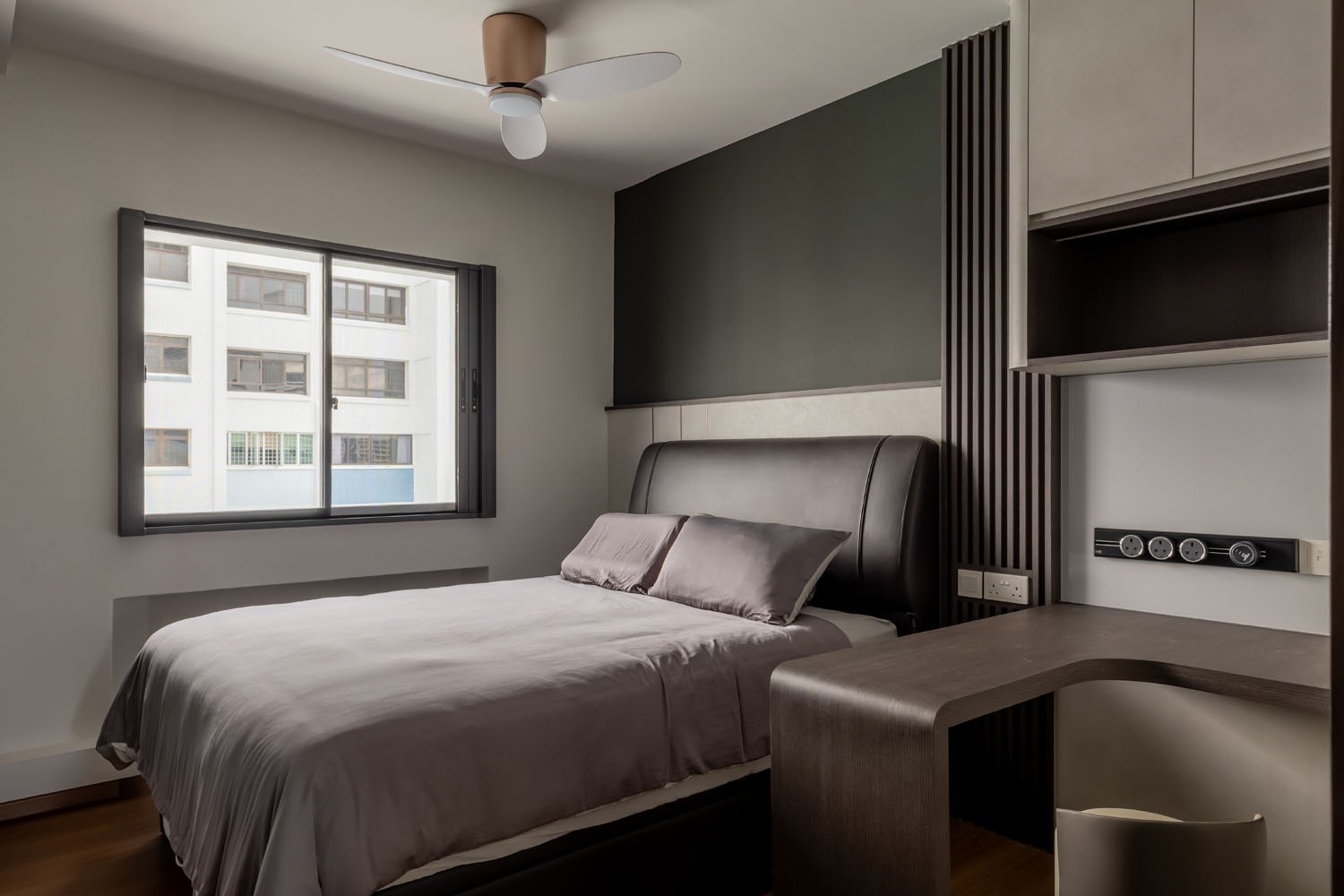
Design: Ovon Design
You'll usually see packages tiered by flat type — 2-room Flexi, 3-room, 4-room, 5-room, and 3Gen. Each tier has a fixed price band, though the final cost still depends on your material choices and any add-ons you request.
Packages exist because new BTO flats share similar bare structures. Since you're not gutting an existing home, contractors can standardise the scope and pass the savings on to you. This makes packages popular with first-time flat owners who want a fast, predictable renovation.
One term worth knowing early: the Defects Liability Period (DLP) — the window after handover during which your contractor must fix any defects for free. Confirm the DLP length before signing any package contract.
2. BTO Renovation Package Cost by Flat Size (2026)
Package prices scale with flat size and the number of rooms needing built-in carpentry. Here's what you can expect across common flat types in 2026.
Flat Type Package Price Range (SGD) Typical Scope
2-Room Flexi $18,000 – $28,000 Flooring, kitchen cabinets, basic wardrobe, painting
3-Room $22,000 – $35,000 Flooring, false ceiling (partial), kitchen, 2 wardrobes
4-Room $28,000 – $45,000 Flooring, false ceiling, kitchen, 3 wardrobes, basic lighting
5-Room $35,000 – $55,000 Full flooring, false ceiling, kitchen, 4 wardrobes, feature areas
3Gen $38,000 – $58,000 Full flooring, false ceiling, kitchen, 4-5 wardrobes, extra bathroom fittings
Source: Aggregated quotes from Renonation-listed interior design firms, Q2 2026.
These ranges assume mid-range materials. Choosing engineered timber flooring over vinyl, or solid-surface countertops over laminate, can push you toward the top of each range or beyond it. Always ask your contractor for a material breakdown, not just a lump sum.
3. What's Included vs What's Not
The word "package" suggests everything is covered, but most packages have clear boundaries. Knowing what falls outside the package prevents surprise costs later.
Design: Unizign Studio
Usually Included Usually Excluded
Vinyl or laminate flooring Marble or engineered timber upgrades
False ceiling with cove lighting Complex ceiling designs or bulkheads
Kitchen cabinets (laminate finish) Solid-surface or quartz countertops
Wardrobe carcasses Wardrobe interior fittings (drawers, pull-outs)
Basic lighting points Feature lighting, smart home wiring
Wall painting (2 coats) Wallpaper or feature walls
Standard electrical points Rewiring, additional power points
Toilet vanity and fittings Bathtub installation, heated flooring
Source: Compiled from HDB renovation package terms across Renonation partner firms, 2026.
Aircon installation, plumbing relocation, and structural hacking are almost never included in a base package. Confirm these separately, since they can add $3,000 to $8,000 depending on scope.
4. HDB Renovation Guidelines You Must Follow
Every BTO renovation, package or custom, must comply with HDB renovation guidelines. Your contractor should hold a valid HDB Registered Renovation Contractor licence — check this before signing anything.
Design: Ovon Design
You'll need to submit a renovation permit application through your contractor for any hacking, electrical rewiring, or plumbing work. HDB typically processes these within a few working days, but plan your timeline around it.
Some restrictions apply regardless of your package tier. You cannot hack load-bearing walls, and any changes to common corridors or external facades need separate approval. Wet works like bathroom re-tiling are also restricted to specific hours to limit disturbance to neighbours.
If you're taking an HDB renovation loan rather than a bank loan, your contractor must be on HDB's approved list. This affects which firms you can shortlist, so confirm loan eligibility early if financing matters to you.
5. Package vs Custom Renovation: Which Should You Choose?
Packages and custom renovations serve different priorities. Here's how they compare on the factors that matter most to BTO owners.
Factor BTO Package Custom Renovation
Cost predictability High — fixed price upfront Lower — costs can shift with design changes
Timeline Faster, typically 6–8 weeks Longer, often 10–14 weeks
Customisation Limited to package tiers Full design freedom
Best for First-time owners, tight timelines Owners with specific design visions
Typical savings vs custom 15%–25% lower —
A package suits you if you want to move in quickly and don't have strong opinions on layout. Custom renovation suits you if you're set on a particular style — say, a wabi-sabi or industrial look — that a standard package can't replicate.
6. How to Compare BTO Renovation Packages
Comparing packages by price alone leads to disappointment. Follow this checklist when reviewing quotes.
Request an itemised breakdown for every package, not just a total figure. This lets you see exactly what materials and brands are used for flooring, cabinetry, and fittings.
Design: Unizign Studio
Ask each firm to clarify their DLP terms in writing. A shorter DLP, or one with vague coverage, is a red flag worth raising before you commit.
Check whether the quoted price includes GST and delivery charges. Some firms quote before GST, which inflates your final bill by 9%.
Verify the contractor's HDB licence and CaseTrust accreditation, if available. This adds a layer of protection if disputes arise during the renovation.
Finally, ask about the payment schedule. Reputable firms tie payments to project milestones rather than requesting large upfront sums.
Frequently Asked Questions
What is included in a BTO renovation package in Singapore?
A typical BTO renovation package Singapore homeowners buy includes flooring, a false ceiling, kitchen cabinets, wardrobe carcasses, basic lighting, and wall painting. Exclusions like rewiring, feature walls, and premium materials usually cost extra.
How much does a 4-room BTO renovation package cost in 2026?
A 4-room BTO renovation package typically costs $28,000 to $45,000 in 2026. The final price depends on your material choices and any add-ons beyond the standard scope.
Can I customise a BTO renovation package?
Yes, most contractors allow add-ons on top of a base package, such as upgraded flooring or extra carpentry. Expect to pay a premium for each customisation beyond the standard tier.
Do I need HDB permits for a BTO renovation package?
Yes, any hacking, rewiring, or plumbing work requires an HDB renovation permit, which your contractor submits on your behalf. Painting and furniture installation typically don't require separate approval.
How long does a BTO renovation package take?
Most BTO renovation packages take 6 to 8 weeks from permit approval to handover. Custom add-ons or supply delays can extend this timeline by 2 to 4 weeks.
Is a renovation package cheaper than hiring separate contractors?
Packages are typically 15% to 25% cheaper than hiring separate contractors for flooring, carpentry, and electrical work individually. You trade some customisation for this cost efficiency.


Do Primary Schools Really Drive Condo Prices in Singapore? These 6 Projects Say Not Always
When purchasing property in Singapore, many buyers and investors often prioritise proximity to primary schools. Even if they have no children or are not planning to enrol them yet, the prevailing belief is that condos near reputable schools enjoy better resale and rental prospects. But is this always true? Must a project without a nearby primary school struggle to perform? And if you personally don’t need schools nearby, is it safe to disregard this criterion?Interestingly, some condos have main

The 2026 Guide to Affordable Housing in Malaysia: What You Need to Know
Even as Malaysia moves deeper into 2026, affordable housing remains one of the country’s most pressing challenges. For many young professionals, newly married couples, and middle-income families, the dream of owning a home feels increasingly out of reach. Despite some signs of price stabilisation, the gap between income levels and property prices—particularly in urban centres—continues to grow.In response, the Malaysian government has stepped up its efforts under the MADANI Economy framework and

Coastal Cabana EC Set to Stir the Market: A Rare Pasir Ris Launch with Strong Family Appeal
For the first time in more than ten years, Pasir Ris is welcoming a brand-new Executive Condominium (EC) — and it is already generating strong interest among homebuyers looking for a lifestyle-centric address in the East. The project, now officially known as Coastal Cabana, arrives at a time when EC launches have been limited, especially in established neighbourhoods with a close-knit community feel.

Summer Suites: Your Last Chance to Invest in Johor Bahru Property at Below Market Value
Johor Bahru is changing fast. If you’ve been paying attention to the city over the last few years, you’ll notice a different kind of buzz — the kind that usually appears right before a major growth cycle. Streets around Bukit Chagar feel livelier, new businesses are moving in, and conversations about JB’s future are becoming a lot more optimistic.This renewed confidence isn’t random. Johor Bahru is gearing up for a new phase shaped by two powerful catalysts: the upcoming Rapid Transit System (RT

I bought a freehold property in Singapore and regret it - here's the big mistake I made
Many Singaporean homebuyers, especially from older generations, have traditionally favoured freehold properties. The appeal is clear: a sense of permanence, the idea that their children or grandchildren will benefit from the investment, and years of advice reinforcing that freehold trumps leasehold. However, recent experiences from homeowners reveal that paying a freehold premium doesn’t always guarantee higher returns.A freehold property that didn’t outperformTY and her husband purchased their

Which HDB towns are getting close to condo prices in 2026?
In 2026, Singapore’s resale flat market is breaking new records — and for some buyers, the difference between an HDB flat and a condo has never felt smaller. Four-room, five-room, and even Executive units are now regularly transacting above the million-dollar mark, with certain mature estates seeing prices that rival private housing.Last year alone, nearly 40% of flats in Bukit Timah, over a quarter in the Central Area, and one in five in Bishan sold for more than $1 million. These figures are e

How We Secured a Spacious Toa Payoh Flat and Saved $300K — Without Waiting Years
For many Singaporeans, getting a first home often means choosing between long BTO waits or paying a premium for a resale unit. But a quietly growing group of buyers has found a middle path: Sale of Balance Flats (SBF).

Dual-Key Condo Units in Singapore: Are They Worth It for Buyers?
Dual-key condominium units have been a fascinating segment of Singapore’s property market in recent years. Designed with two separate entrances and layouts under a single title, these units promise versatility—appealing to multi-generational families, investors seeking rental flexibility, or homeowners wanting privacy within the same property.Yet, despite the concept’s appeal, dual-key units have often drawn mixed attention at new launches. Their unique layouts, combined with generally higher qu

The Hidden Costs of Buying a Home in Singapore (And How to Plan for Them in 2026)
When shopping for a new home, most buyers focus almost entirely on the property’s price tag. But in Singapore, the actual cost of homeownership goes far beyond the purchase price. From stamp duties to renovation works, legal fees to maintenance charges, these additional costs can add tens or even hundreds of thousands of dollars to your overall budget.Failing to account for these expenses often leads to unpleasant surprises. To help you plan better, here’s a comprehensive breakdown of the hidden

Why Singapore’s Newly Completed Condos Are Quietly Making Owners Hundreds of Thousands in Profit
It’s been said that the past five years have changed Singapore’s property market more dramatically than the two decades before. And perhaps that’s true — Covid-19, supply bottlenecks, and shifting buyer priorities have turned old “rules” upside down.For example, small units once thought to be investor-only are now occupied by young professionals, while prime central homes — once the domain of wealthy foreigners — are being snapped up by local families seeking prestige and convenience. Amid all t

The cheapest 4-room central HDB flats in Singapore still available under $520k
For many Singaporeans, living near the city centre offers a lifestyle of unmatched convenience — quick commutes, abundant dining options, and proximity to popular destinations like Orchard Road and the CBD. But as property prices continue to climb, the idea of owning a centrally located home often feels out of reach. Fortunately, there are still a few gems left: four-room HDB flats near the city that can be yours for under $520,000.These units combine accessibility with value, offering a rare ba

Are Singapore’s Oldest HDB Flats Losing Value? A 2026 Update
Singapore’s Housing & Development Board (HDB) flats have long been a stable part of the property market, but the question on many minds is whether the oldest units are finally starting to lose value. After all, these flats aren’t getting any younger, the SERS program has mostly concluded, and the VERS initiative looms on the horizon.Back in 2018, the government made waves by pointing out that even flats over 50 years old could still appreciate. Fast forward to 2026, and it’s worth revisiting the


