
AD
Historically associated with sailors reacting to the pitch, roll and yaw of ships, motion sickness now affects people in cars, trains, planes and even in space. The symptoms can start within minutes of feeling movement and last for hours after it stops. Classic motion sickness often begins with feeling warm, sweaty and dizzy. You might also develop a headache or feel fatigued. As the condition worsens, nausea sets in and can lead to vomiting. While motion sickness is generally temporary, it can hold you back from travelling and other activities you enjoy, sometimes in life-changing ways.
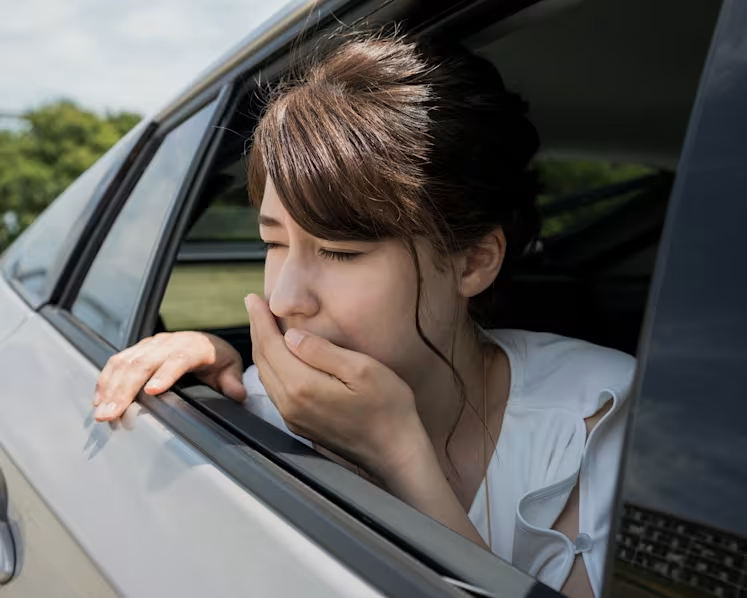
James Phillips, a vestibular neurophysiologist at the University of Washington, said he had planned to be a marine biologist until he spent time on a research expedition vomiting over the side of the boat. "I just couldn't tolerate it, so I abandoned that career ambition," he said. We asked experts what's behind motion sickness and which of the products to treat or prevent it — from glasses and bracelets to medications — really work.
Why do people react this way to motion?
Scientists don't know exactly what causes motion sickness, but one theory is that it's the body's reaction to conflict between different senses. If you're reading in a car, for example, your eyes see a stationary page. But the parts of your inner ear that detect acceleration and rotational motion sense you're moving, even if you're not aware of it, said Paul DiZio, a cognitive neuroscientist at Brandeis University.
A newer theory among many researchers, DiZio said, is that motion sickness results from a mismatch between what your brain expects your senses to detect and what they do detect. Even before a motion occurs, "you build a little model in your brain of how it's going to feel," he said, and you get sick if what you sense doesn't fit those predictions. It's unclear why some people react with motion sickness, but some scientists think the brain interprets inconsistency as resulting from a neurotoxin, and sets off vomiting in response.
Most people experience some motion sickness from extreme motion, but some also react to milder movements. Children are generally more susceptible than adults, possibly because they have not yet become habituated to such movements. Women are more at risk than men, most research suggests. One study estimated that genes account for 57 per cent to 70 per cent of a person's susceptibility to motion sickness.
Dr Kristen Steenerson, a vestibular neurologist at Stanford University School of Medicine, said you're more likely to get motion sickness if you have migraines. In particular, people with vestibular migraines — who experience vertigo or dizziness, along with some migraine symptoms, sometimes without a headache — may get sick watching an action movie, unloading the dishwasher or even reading while sitting still, she said.
How can I prevent motion sickness?
Over-the-counter medications, including antihistamines like Dramamine and Bonine, are effective but they should be taken before motion starts, Steenerson says, and they can have side effects, like drowsiness. Scopolamine, a patch worn behind the ear, helps some people but can also come with side effects such as dry mouth, and isn't recommended for children or older adults. Last year, the US Food and Drug Administration approved a new prescription drug, Nereus, that targets different receptors in the brain to prevent motion-induced vomiting and may have fewer side effects, Phillips said.
There are also behavioural approaches that may help prevent motion sickness. If you're in a car, driving may reduce symptoms because you're in control of your environment. If you're a passenger, Steenerson said, sitting toward the centre of the car and keeping your eyes on the road can help. Dr Erich Voigt, an otolaryngologist at NYU Langone Health, recommends staying toward the centre of planes and above deck on boats, where you can see the horizon.
Controlled breathing and distractions like fresh air, pleasant music or scents like rose or lemon may help reduce symptoms, some experts said. But evidence to support the effectiveness of ginger or other supplements is mixed, and most studies suggest acupressure bracelets and motion sickness glasses help no more than a placebo.
If motion sickness is still holding you back, a physical therapist who specialises in neurology or vestibular rehabilitation can help you identify motions that set off symptoms and improve your tolerance over time. This kind of controlled habituation, Steenerson said, can be more effective than many other approaches. "It takes time and it's unpleasant," she said, but if you put the time in, it can work "really, really well."
Paying attention to what sets off your symptoms can help you navigate them long-term. For example, Steenerson said she gets sick in cars but loves roller coasters. Phillips said he has a sailboat that doesn't give him the same debilitating symptoms that the research vessel did. Though most people are able to manage motion sickness if they plan ahead, he said, "there's some things that are just, you know, overwhelming for some people."
What works and what doesn't
Medications taken before travel can be effective, but drowsiness and dry mouth are common side effects. Behavioural strategies — sitting in the front seat, facing forward, fixing your gaze on the horizon, getting fresh air — are simple and worth trying. Controlled breathing and distraction may help some people. Evidence for ginger is mixed. Acupressure bracelets and motion sickness glasses have not been shown to work better than a placebo in most studies. Vestibular rehabilitation with a specialist can be highly effective for persistent cases, but it requires time and commitment.
The bottom line
Motion sickness is common and often manageable with preparation. If you know you're prone to it, take medication before you travel, choose your seat carefully, and keep your eyes on the horizon. If symptoms are severe or interfering with your life, consider seeing a specialist for vestibular rehabilitation. While no single remedy works for everyone, a combination of strategies can make travel far more comfortable.


China Expands Mental Health Services to Tackle Rising Cases Among Youth
HONG KONG — In response to growing mental health challenges, particularly among children and teenagers, China's National Health Commission (NHC) has unveiled a new initiative to strengthen mental health services nationwide from 2026 to 2027.

Health Screening in Singapore (2026): How Much It Really Costs & Where to Go
We all know how crucial health screenings are—spotting potential health issues early can save you from high medical bills and serious complications down the line. But when it comes to the cost of these screenings in Singapore, things aren’t always straightforward.

Everyday Chemicals May Disrupt Gut Health, New Study Warns — What Singapore Residents Should Know
A growing body of research continues to highlight the importance of maintaining a healthy gut, yet a new analysis from the United Kingdom suggests that certain everyday chemicals may quietly be undermining this vital system. While gut wellness has become a popular topic in recent years, scientists say there may be more unseen influences affecting our digestive environment than previously understood.

Germany on High Alert After Rare Foot-and-Mouth Disease Outbreak in Water Buffalo
HAMBURG — German officials breathed a cautious sigh of relief this week as extensive testing revealed no additional cases of foot-and-mouth disease following last week's alarming discovery - the country's first outbreak in decades among a herd of water buffalo near Berlin.

US Records First Fatal Human Case of H5N1 Bird Flu in Louisiana
Health officials in Louisiana confirmed the nation's first human fatality linked to H5N1 avian influenza on Monday (Jan 6), raising concerns about the virus's potential severity despite assurances of low public risk.

Global Immunization Progress and Challenges in 2024
In 2024, new data from the World Health Organization (WHO) revealed that a million more children completed the crucial three-dose vaccination against diseases like diphtheria, tetanus, and whooping cough compared to the previous year.

Experts Reveal the Smartest Ways to Boost Your Metabolism and Keep It High All Day
Many people wonder why some individuals seem to burn energy effortlessly while others struggle, even with disciplined eating and regular exercise. The difference often comes down to metabolism — the complex internal system responsible for turning food into energy, supporting cell repair, and maintaining hormonal balance. The encouraging news is that your metabolism isn’t fixed. According to specialists, it can be improved at any stage of life with the right habits.Two medical experts — New York–

China Unveils National Strategy to Combat Rising Dementia Crisis Amid Aging Population Boom
HONG KONG — In a bold move to address one of its most pressing healthcare challenges, China has rolled out an ambitious nationwide initiative targeting dementia – now officially recognized as a critical public health issue threatening millions of families across the nation.

Obesity Is Rising in Singapore — And It's About More Than Just Overeating
Obesity is becoming an increasingly pressing health issue in Singapore. Recent findings from the National Population Health Survey show a rising trend in obesity among adults aged 18 to 74. Adding to the concern, the World Obesity Federation has ranked Singapore third among Asian countries for adult obesity rates.

Preparing for Your First Hyrox Event: Dos and Don'ts
Are you planning to participate in your first Hyrox event or considering it in the near future?

Paternal Postpartum Depression: Understanding and Addressing a Father's Mental Health
Postpartum depression (PPD) is often associated with mothers, but did you know that it can also affect fathers?

Extended Breastfeeding May Lower Mothers’ Risk of Heart Disease and Stroke, Study Shows
Breastfeeding is widely recognised for its benefits to infants, providing essential nutrition and immunity. However, a recent study indicates that longer lactation may also offer significant cardiovascular benefits for mothers, reducing the risk of coronary artery disease (CAD) and stroke before the age of 70.The Study and Its ApproachResearchers examined data from the Copenhagen Perinatal Cohort, which included 6,857 mothers who gave birth between 1959 and 1961. The women were followed for over


